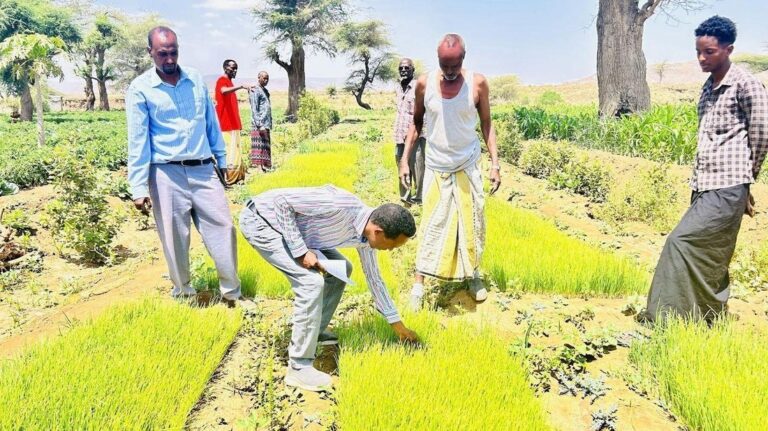
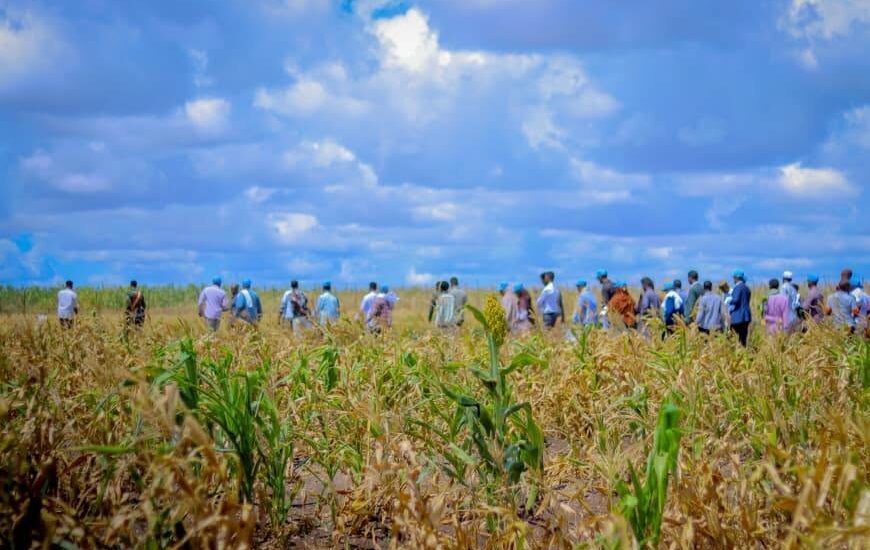
In the drylands of Ethiopia’s Somali Region, unpredictable rainfall, recurring droughts, and limited agricultural opportunities continue to challenge farming families. To help communities adapt and thrive, CAAP brought together 46 farmers, Development Agents, and woreda agriculture experts from Awbare, Haroreys, and Tuliguled woredas for a Farmer Field School and experience-sharing visit in Tuliguled.
At the demonstration site, participants explored climate-smart farming practices through hands-on learning. Farmers compared improved and drought-tolerant seed varieties, crop diversification approaches, water-efficient drip irrigation systems, integrated pest and weed management techniques, and modern farming methods alongside traditional practices. By observing results directly in the field, participants gained practical knowledge to improve productivity and make informed decisions on their own farms.
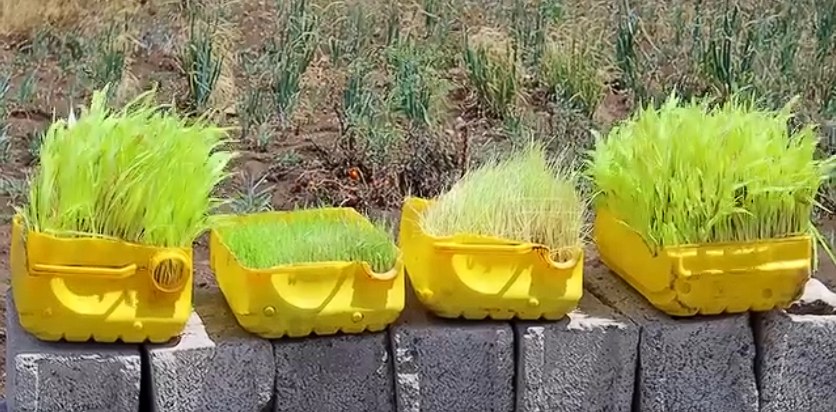
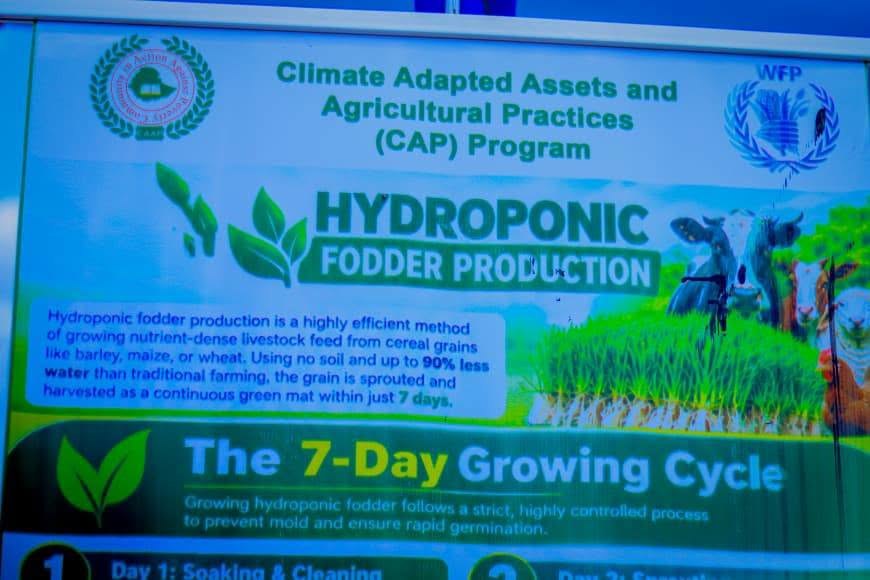
One of the highlights of the visit was the hydroponic fodder production unit, where participants followed the full seven-day fodder growing cycle, from seed soaking and germination to harvest. For many farmers, the technology offered a practical solution to one of the region’s most pressing challenges: livestock feed shortages during dry seasons when natural pasture becomes scarce.
What is hydroponic fodder?
Hydroponic fodder is an innovative way of growing fresh, nutrient-dense livestock feed from cereal grains such as barley, maize or wheat, without soil. The grain is soaked, sprouted in trays and watered for a few days, then harvested as a green mat in just seven days, using up to 90% less water than growing fodder in the field.
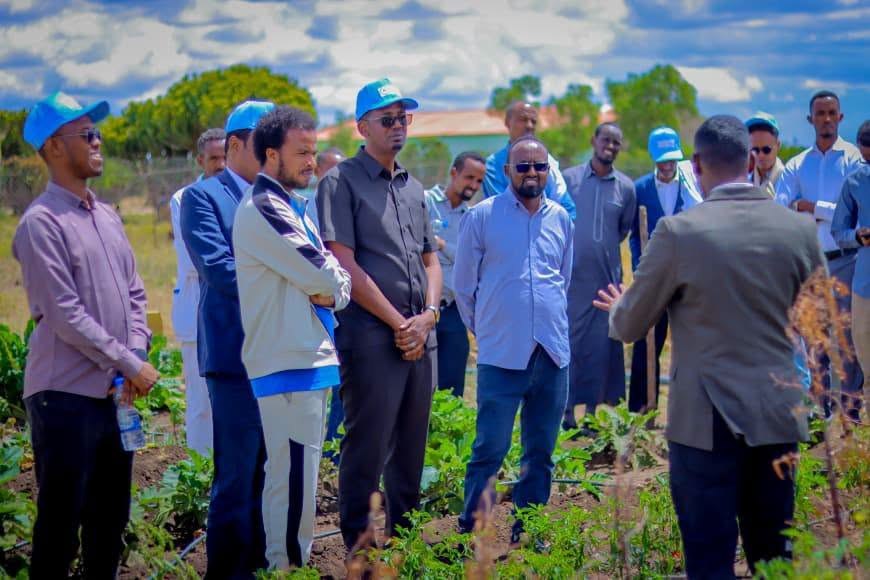
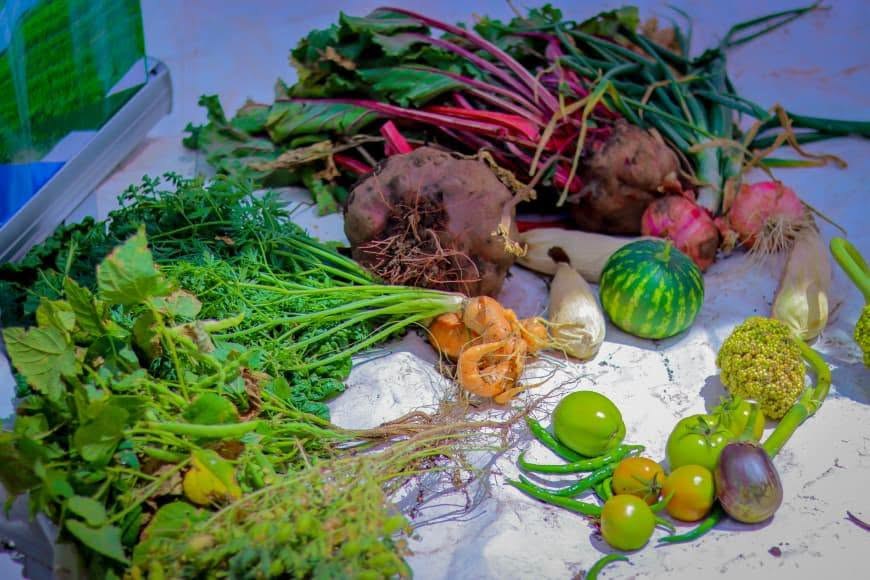

The learning event also brought together officials from regional, zonal, and woreda agricultural offices, creating valuable opportunities to exchange experiences and discuss pathways for scaling up proven agricultural innovations. Participants recognized that climate-smart farming practices can increase production, improve crop quality, strengthen livestock systems, and enhance household resilience across the three target woredas.
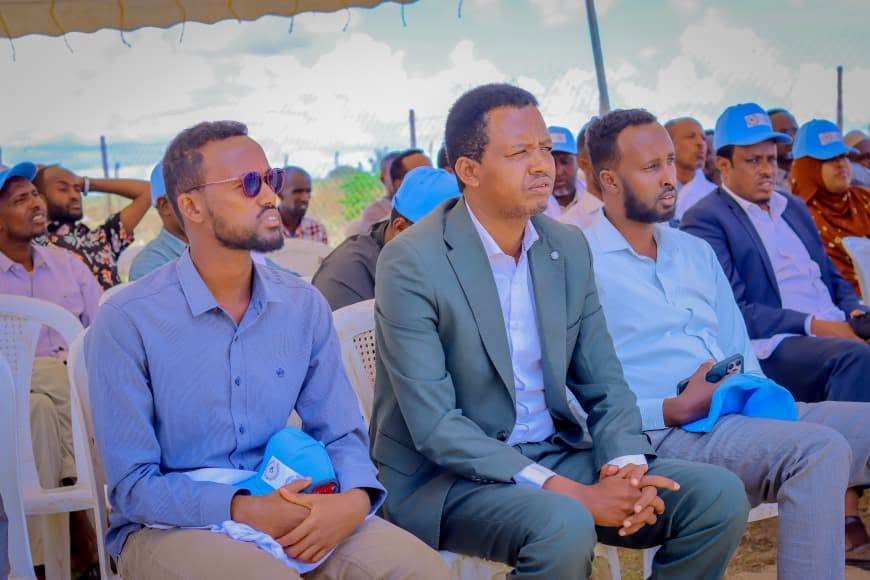
Somali Regional TV (SRTV) reports from the Tuliguled demonstration site
SRTV covered the experience-sharing visit, where officials from regional, zonal and woreda levels saw modern farming methods first-hand alongside farmers from the three woredas.
Watch on Facebook ↗The Farmer Field School builds on CAAP’s broader agricultural support, which includes the provision of improved seeds, farm tools, and productive inputs. By combining access to resources with practical, farmer-led learning, CAAP is helping communities transform knowledge into action and improve livelihoods sustainably.
Implemented through the Integrated Smallholder Farmers Resilience and Livelihood Support (Integrated SHF-RaLS) Project, funded by the World Food Programme (WFP), the initiative supports 1,200 agro-pastoral households across Awbare, Haroreys, and Tuliguled woredas. Through climate-smart agriculture, natural resource management, financial inclusion, market linkages, nutrition education, and livelihood diversification, the project is strengthening resilience and creating pathways toward greater food security and economic opportunity for farming families.
Goals we are supporting through this initiative
Sustainable Development Goals
SDG 1 – No poverty · SDG 2 – Zero hunger · SDG 13 – Climate action
CAAP pillar
Partner
Somali Region Multi-Year Resilience Strategy (MYRS), 2023–2028
Climate adaptation · Livelihood diversification
Ethiopia Ten-Year Development Plan (2021–2030)
Climate-resilient green economy
More stories: HODAN RuSACCO · Six woredas · All stories of change