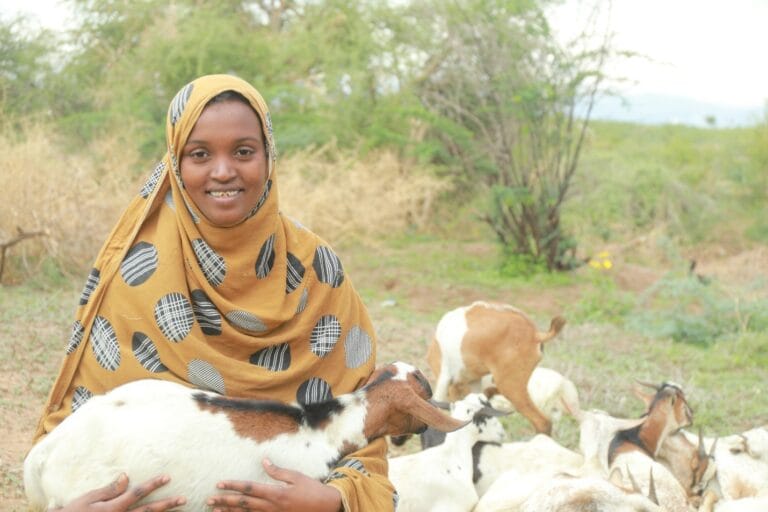
In Jedane village, Shinile woreda, women displaced by conflict are turning flood-prone, bush-covered plots into productive gardens through the RISE project. Here are four parts of their story.
Asma
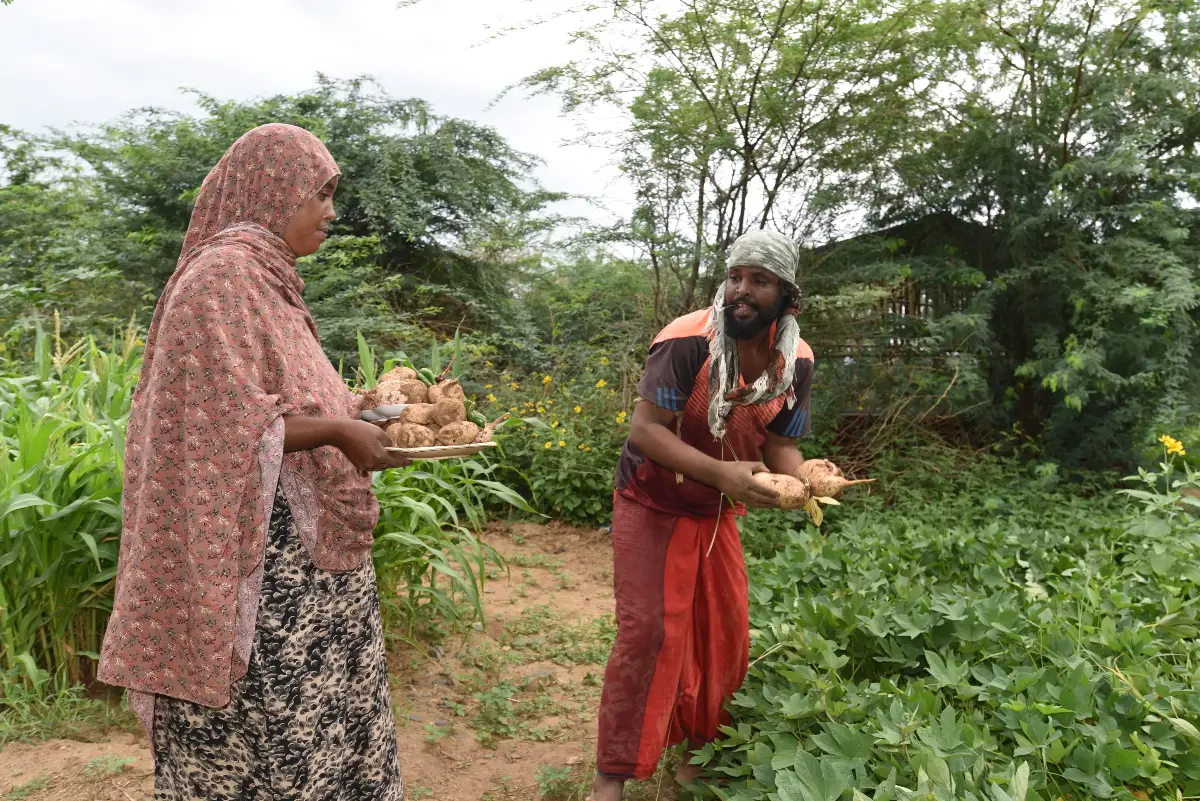
Displaced from Oromia by conflict eight years ago, Asma, 22, spent five years relying on aid in a camp in Dire Dawa before her family was relocated to Jedane, onto land that was flood-prone, overgrown and hit by frequent drought. She offered her plot as a RISE demonstration site. Project experts rehabilitated it, and she now grows drought-tolerant, early-maturing vegetables that feed her family and earn her about 12,000 birr a month.
Asma and her husband, Jawhar, harvest sweet potatoes from their rehabilitated backyard. Photo: UN Women/Fikerte Abebe
Read this part of the story →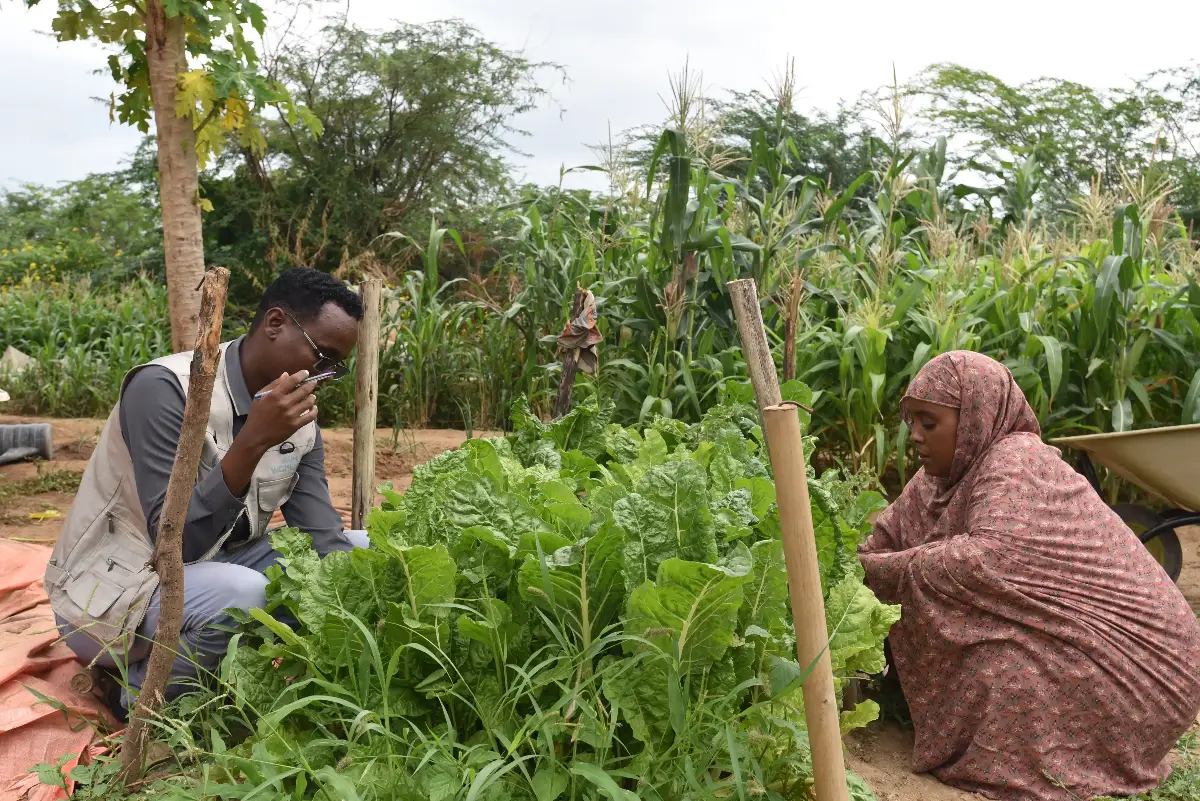
Demonstration Sites Accelerate Adoption of CSA Practices
Mohamed Korane, the project’s Climate-Smart Agriculture (CSA) expert, highlighted the success of empowering vulnerable displaced women, many with no prior farming experience, through practical backyard farming training and demonstration sites. By adapting training schedules to accommodate household responsibilities, participation increased significantly, and visible results encouraged more women to join. He emphasized that witnessing women transform their backyards into productive, drought-resilient gardens demonstrated the strong impact of empowering women in agriculture.
Mohamed, the climate-smart agriculture expert, with Asma at her Swiss chard garden. Photo: UN Women/Fikerte Abebe
Read this part of the story →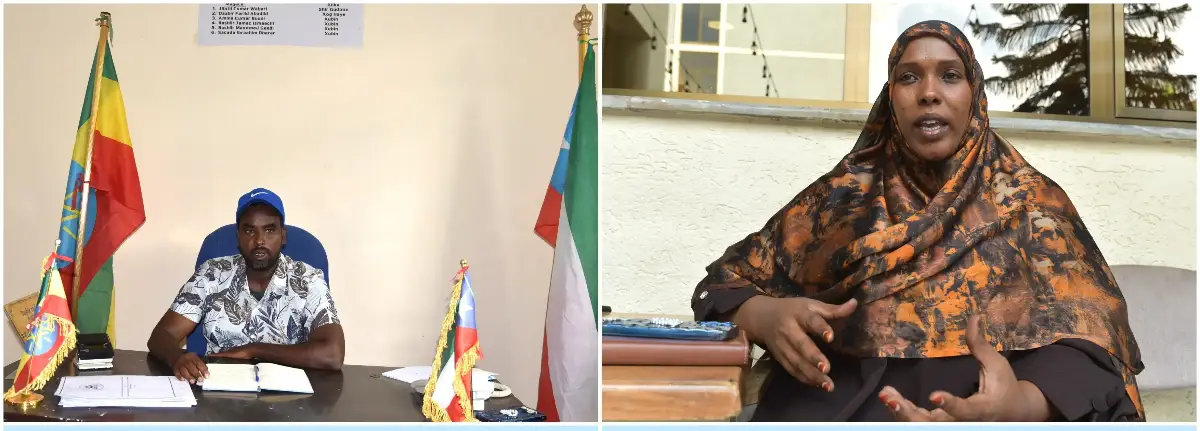
SACCO
The Shinile Bureau of Agriculture calls RISE the first initiative of its kind, linking backyard farming with livestock, women’s affairs and savings and credit cooperatives (SACCOs). Life and business skills training helped women embrace saving: Asma, once doubtful, now saves every month. Women who could not afford SACCO registration received seedlings, tools and training, and sold their surplus produce to join, access loans and build steady livelihoods.
Tahir Farid, Bureau of Agriculture head in Shinile, and Hodan Nour, UN Women Somali Region lead. Photo: UN Women/Fikerte Abebe
Read this part of the story →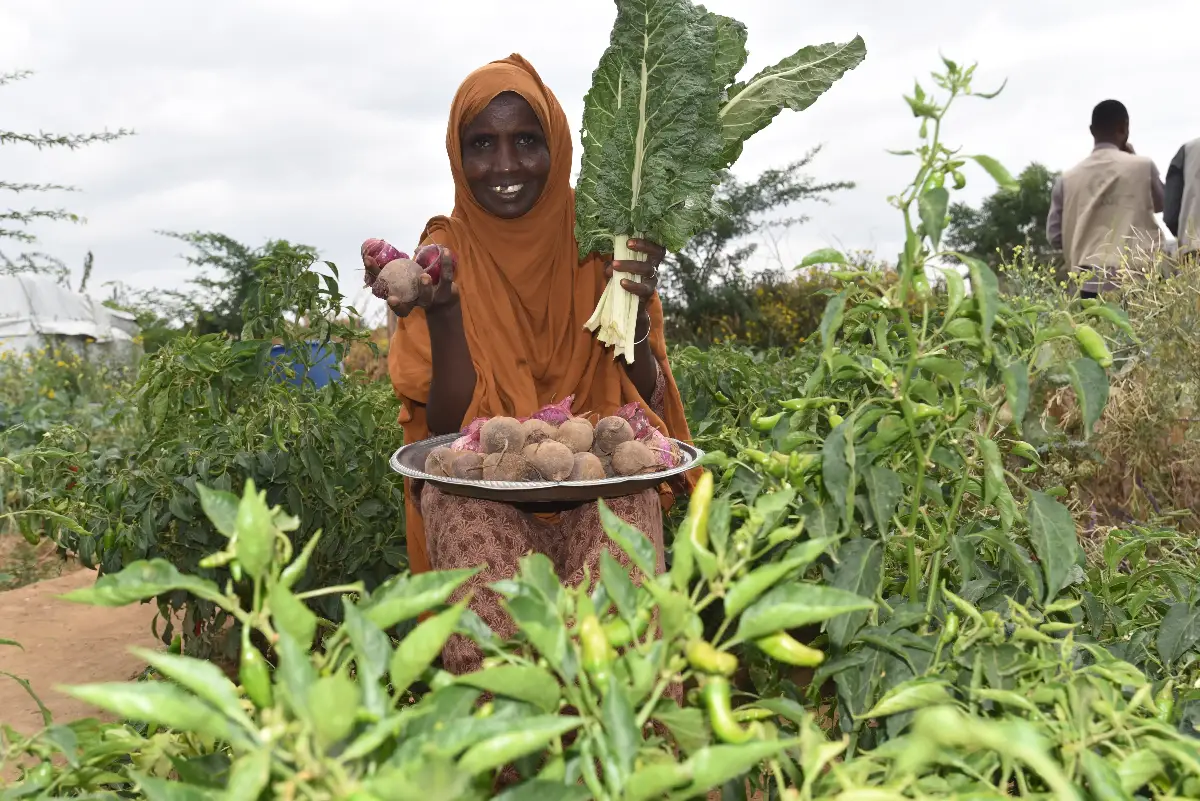
Gardening Skill and Water Access Uplift Hawa’s Family to a Better Life
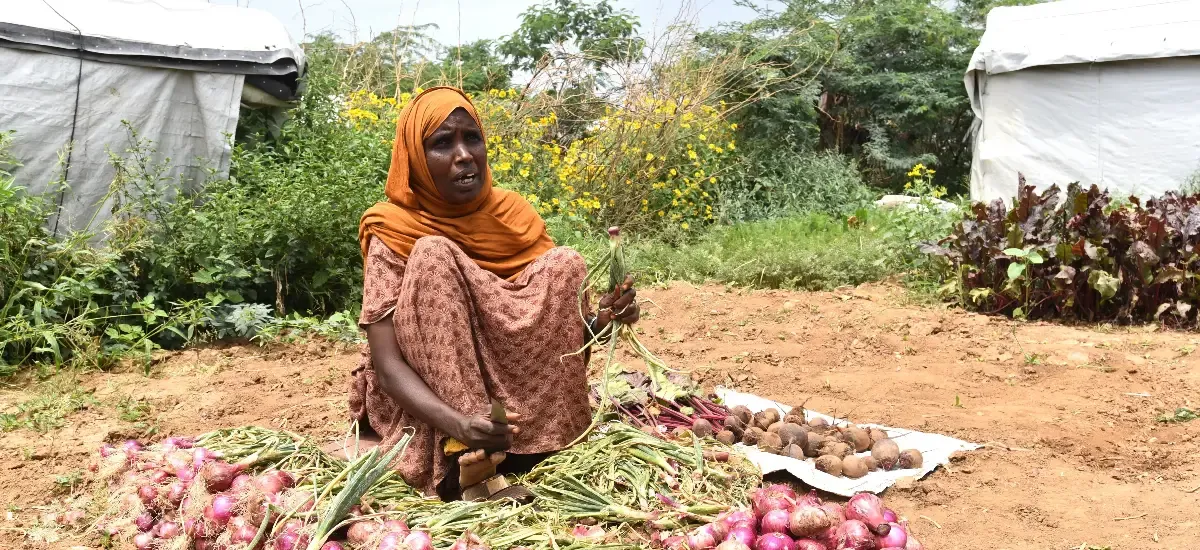
A widowed mother of seven, Hawa spent four years in a camp for displaced people in Dire Dawa. In Jedane, her family still depended on food handouts and water donations from the local mosque. With piped water, irrigation skills and drought-tolerant seeds from RISE, she now grows onions, beets, tomatoes, Swiss chard and chili peppers. Within a year her harvest was feeding her family and earning 300–400 birr a day, helping keep her children in school. Her next goal is to join the SACCO.
“RISE is different.” – Hawa
Hawa in her backyard with samples of harvested vegetables. Photo: UN Women/Fikerte Abebe
Read this part of the story →Read full story (UN Women Africa) ↗
About the RISE project
The Resilience and Institutional Support to Empower Women (RISE) project in Somali Region is a two-year pilot (2024–2026) supported by UN Women and implemented by Community in Action Against Poverty (CAAP) with funding from the Governments of Norway, the Netherlands and Sweden. It aims to improve resilience and livelihood opportunities for drought- and conflict-affected women and girls and their families.
Goals we are supporting through this initiative
Sustainable Development Goals
Somali Region Resilience Strategy (2023–2028)
Livelihood diversification · Climate adaptation · Social inclusion
Ethiopia Ten-Year Development Plan (2021–2030)
Women’s and children’s participation · Climate-resilient green economy
More stories: Nesteho · Garsira · Anisa · All stories of change