Mobilizing Diaspora and Private Sector Resources for Inclusive and Climate-Resilient Growth
2026–2030 | Somali Region, Ethiopia
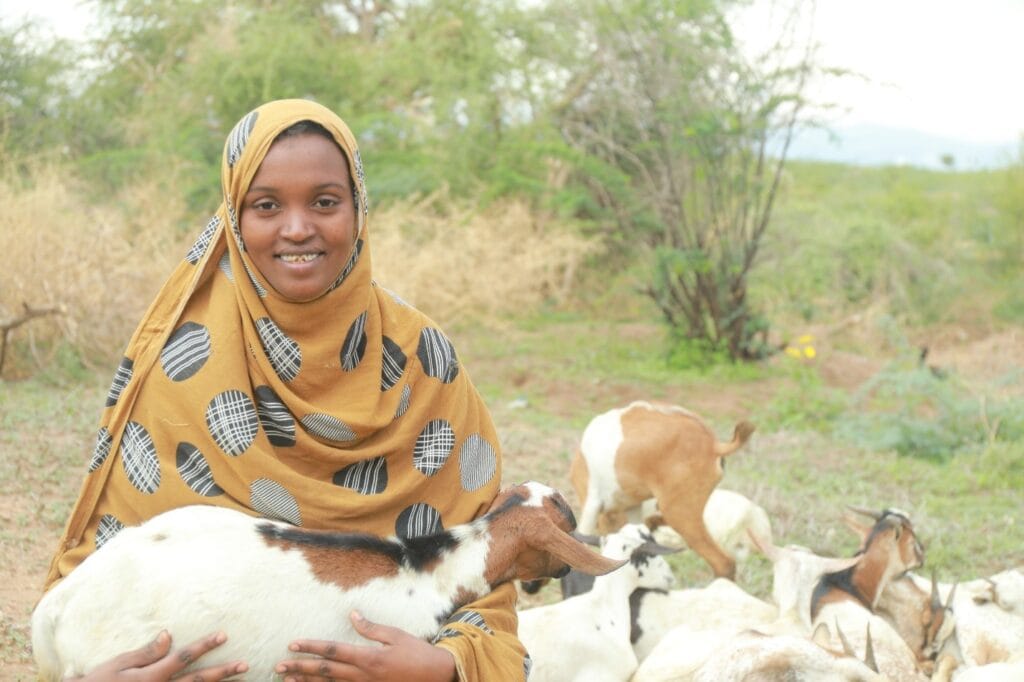
Case Study: Garsira, 22 — From Displacement to Self-Reliance
Once lost everything due to displacement and constrained by tradition and limited means, Garisa, 22, has emerged as a symbol of resilience and hope through CAAP’s Resilience and Institutional Support to Empower Women (RISE) project, funded by UN Women. With business training and a Sharia-compliant loan from Berwaqo SACCO, she now leads a thriving goat-trading cooperative, earns a stable income, supports her family, and inspires others toward self-reliance. R2R scales thousands of such journeys from Remittance to Resilience. Garsira’s journey—from displacement to empowerment and dignity, represents the Remittance-to-Resilience (R2R) vision: mobilizing diaspora and private sector resources to build inclusive, climate-resilient futures where women lead change and communities thrive.
1. Context
The Somali Region has faced 13 droughts in 23 years, with floods and displacement, leaving over one million IDPs (37% of Ethiopia’s total) as of 2022. Between 2012 and 2022, the people dependent on relief tripled, with 56% of the population requiring aid. Despite significant investments estimated at over USD 4.5 billion in drought response since 2015, poverty and aid dependency remain pervasive.[1] 22.4%[2] Of the population lives below the poverty line, and youth unemployment nears 39%[3], driven by limited access to finance, skills, and markets. Vulnerable children and persons with disabilities face exclusion and barriers to essential services. Remittances contribute about 30%[4] of the Region’s GDP, representing a primary but underutilized source of resilience financing. However, most transfers are informal and consumption-oriented, with only 22% of Ethiopia’s $35 billion annual remittances flowing through formal channels. The Commercial Bank of Ethiopia’s commitment to mobilize ETB 50 billion in diaspora deposits in FY 2025/26 signals renewed opportunities to formalize these flows.[5]. R2R informed by DRC and IOM programs, channels diaspora and private-sector resources through structured, transparent, and risk-informed financing mechanisms, converting aid dependency into resilience across the Somali Region.
2. Why Engage Diaspora and Private Sectors
The diaspora and private sector are vital lifelines for the Region, providing remittances, creating jobs, and local innovation. Yet, their engagement remains informal and fragmented, constrained by weak financial systems, limited coordination, and the absence of structured investment mechanisms. A coordinated and transparent platform is therefore essential to convert individual and short-term contributions into sustained, scalable development investments aligned with government priorities and community needs.
3. Why invest in R2R
R2R provides a structured, accountable platform that channels diaspora remittances, Zakat, and private sector contributions into risk-informed, inclusive, and climate-smart investments: Sharia-compliant SACCOs for financial inclusion; MSME financing for job creation; Co-financed community infrastructure and social protection for vulnerable families and orphans.
Through revolving funds, blended finance, and remittance-backed credit, every birr is reinvested to multiply impact and accountability. Global evidence demonstrates that each $1 invested in resilience saves $4 in future economic losses (World Bank), while early-warning systems reduce disaster impacts by up to 30%, affirming both the cost-effectiveness and urgency of investing in R2R
4. Approach
The R2R Program applies four interlinked pathways that collectively transition communities from aid dependency to resilience. Each pathway tackles a critical barrier: finance, service delivery, protection, or accountability, together forming a climate-resilient development framework for the Somali Region.
Pathway 1: Remittance-to-Investment (R2I) Model: Transforms diaspora and private sector capital into productive, risk-informed investments that drive MSME growth, job creation, & local economic recovery
- Remittance Top-Ups: A tri-partite co-financing model: 10% beneficiary, 60% diaspora/private sector & 30% R2R/donor contribution, with business skills, financial literacy, and business development, converts contributions into MSME financing, generating jobs, and self-reliance.
- Remittance-Backed Credit & Guarantees: Uses diaspora transfer histories and SACCO savings as collateral to unlock affordable, Sharia-compliant credit for women and youth who lack traditional guarantees, enabling them to access inclusive finance to start or expand businesses
- Value Chain Development: Links MSMEs to inputs, markets, digital finance, and climate-smart production, strengthening business resilience and market competitiveness.
- Diaspora Partnerships for Innovation: Engages diaspora investors and professionals to co-finance MSMEs, mentor youth & transfer skills in ICT, agribusiness, renewable energy, etc.
Pathway 2: Community Solidarity Fund: A pooled financing mechanism providing predictable resources before, during, and after crises, while co-financing essential services and social protection.
- Women-Led SACCOs: Revolving funds capitalized by diaspora, private sector, community savings, and R2R/donor co-financing ensure access to affordable credit. Members receive entrepreneurship, financial, and life skills training, promoting inclusive economic empowerment.
- Community Co-Financing on Quick Impact Projects: Through a 20/50/30 cost-share model (community/diaspora-private sector/R2R), joint investment in schools, clinics, and water systems, ensuring local ownership.
- OVC Support: Establishes and sustains the Gode OVC Boarding School and scholarship programs to guarantee education, protection, and inclusion for orphans and vulnerable children (OVC)
- Social Protection Packages: Provides seasonal and crisis-responsive support, including Ramadan/Child Eid packages, dignity kits, referrals for chronically ill individuals, and safe spaces, addressing urgent needs while upholding dignity and protection for the most vulnerable.
- Crisis Modifier Fund: Ensures rapid, flexible financing during early warning triggers, reducing humanitarian costs and protecting R2R development gains, reinforcing resilience to shocks.
Pathway 3: Zakat for Resilience & Inclusion: Sharia-compliant, independently audited Zakat Fund supporting education, livelihoods, and social protection, for the most marginalized communities.
Pathway 4: MEAL and Advocacy: Strengthens accountability, learning, and policy influence for scalable impact, using digital feedback systems, regular monitoring, and evidence-based advocacy.
5. Geographic Focus
R2R targets high vulnerability woredas in the Somali Region, leveraging CAAP’s presence and aligning with DRMB and Planning Bureau priorities under the MYRS. R2R engages IDPs and host communities through climate-smart, government-linked interventions to strengthen local systems and social cohesion.
Globally, R2R engages diasporas through digital giving platforms and liaison officers, enhancing diaspora engagement and resource mobilization. At the same time, it positions Somali Region priorities in regional and global resilience and financing platforms (AU, UN, and donor networks) and partners with banks, MFIs, and fintech providers to scale innovative, risk-informed financing solutions.
6. Implementation & Management
R2R will sign MoUs with key stakeholders[6]. A multi-stakeholder Steering Committee will provide strategic oversight, while a Sharia Advisory Board ensures compliance with Zakat and SACCO operations. The program follows a localization-first model, emphasizing government leadership, community ownership, and adherence to CHS/AAP[7] standards. Robust safeguards, including due diligence, financial controls, independent audits, and community feedback systems, uphold integrity and transparency. A dedicated Program Manager, supported by CAAP’s senior management and field teams, will oversee delivery, while Fund Managers based in key diaspora hubs coordinate resource mobilization and global partnerships. R2R’s implementation is built on inclusive collaboration with government institutions – for policy alignment and coordination; diaspora and private sector for resource mobilization and investment; MFIs, SACCOs, and fintech providers for financial inclusion and access; CSOs and communities for localization and accountability; universities and research institutions for evidence generation and innovation; and donors and development partners for co-financing and guarantees.
7. Strategic Framework
The R2R Strategic Framework aligns with the Somali Regional MYRS, SDGs, the Sendai Framework for Disaster Risk Reduction, and the Addis Ababa Action Agenda on Financing for Development.
Goal: To contribute to a resilient, inclusive, and self-reliant Somali Region capable of withstanding shocks and sustaining equitable development, in line with the MYRS impact goal.
Objective: To transform diaspora remittances, Zakat, and private sector capital into structured, risk-informed, and climate-smart investments that create jobs, expand social protection, and strengthen essential services for vulnerable communities.
Theory of Change: If diaspora and private-sector resources are mobilized through structured, risk-informed mechanisms and reinforced by capacity building and accountability systems, then these flows will evolve into predictable, sustainable investments that enhance livelihoods, education, and protection. Over time, this will reduce long-term aid dependency and promote community resilience.
8. Expected Outcomes by 2030
Outcome 1: By 2030, 50,000 vulnerable people, particularly women, youth, and persons with disabilities, will access dignified and sustainable livelihoods through inclusive financing and capacity development.
- 10,000 MSMEs financed (80% profitable after 1 year), 50,000 jobs, 70% women/youth/25% PWD
- 10,000 women and youth trained in entrepreneurship, life skills, and financial literacy.
- 100 Sharia-compliant SACCOs are operational and integrated with digital financial platforms.
- 250 diaspora professionals mentor 2,500 local youths, fostering innovation and skills transfer.
Outcome 2: By 2030, 300,000 people, including orphans, women, and IDPs, will access improved education, protection, and social services within safe, resilient environments
- Gode OVC Boarding School is operational with 2,000 OVC enrolled and 1,000 OVC scholarships
- 100 climate-resilient community facilities (schools, clinics, water points) co-financed & functional
- 1,000 chronically ill patients receive medical treatment and referral support.
- 60,000 people supported with Ramadan and Child Eid packages promoting dignity and inclusion.
- 100 dialogues on GBV prevention, displacement, peacebuilding & climate resilience conducted
9. Resources & Financing Model
By 2030, R2R aims to mobilize ETB 1 billion (≈$7.14 million) through a blended financing model of diaspora and private-sector contributions (50%), community cost-sharing (20%), and R2R/donor co-financing (30%). Leveraging innovative financing mechanisms: remittance top-ups, remittance-backed credit, pooled solidarity funds, Zakat financing, and co-investment schemes, supported by guarantees and risk-sharing instruments to attract private investment. Every birr raised will generate 2–3 times in additional co-financing. With a substantial Value for Money framework, resources will be measured by jobs created, MSMEs supported, and beneficiaries reached (e.g., USD 150 equips a youth with certified vocational skills for sustainable income. Funds will be managed under IPSAS and national regulations, with quarterly public disclosures to ensure transparency, accountability, and donor confidence.
10. Risk Management & Sustainability
R2R addresses key risks through targeted mitigation measures: high-risk climate shocks are managed through a Crisis Modifier Fund and early warning systems; medium-risk fraud and AML breaches are mitigated through robust due diligence, dual signatories, and independent audits; and low-risk safeguarding breaches are prevented with PSEA compliance, confidential reporting, and community feedback mechanisms. Sustainability is ensured through institutionalized SACCOs, revolving funds, Zakat governance, and capacity development, ensuring ownership, financial continuity, and resilience.
11. Conclusion & Call to Action
R2R is a transformative, locally anchored climate-smart financing model that aims to mobilize ETB 1 billion, support 10,000 MSMEs, create 50,000 jobs, and deliver essential services to 300,000 people. CAAP calls on donors, diaspora, private investors, communities, and government partners to co-finance R2R, where every birr multiplies impact, fostering dignity, resilience, and inclusive growth. CAAP and partners remain committed to transparent, accountable, and locally led implementation, ensuring measurable, lasting results for the Somali Region’s most vulnerable communities.